Sunday, October 21, 2012
Saturday, October 20, 2012
Colours of Kas
But make sure that balcony has a view of the water – that’s
not hard, as most of the hotels in this tourist town are perched on the hills
that rise from the Mediterranean to the rocky cliffy behind the busy harbour –
and you will be ready for a day doing nothing more than watching the sun move
across the sky.
I’m in Kas for two nights, with one lazy day in between to
do nothing but look at the view, and I am really appreciating being back on the
coast after spending days in the dry of central Turkey.
Everything in Cappadocia was the colour of dust but in this
Mediterranean village where every building has white walls and a terracotta
roof the sky and sea are two vibrant shades of blue while the flowers growing
on the bushes that cover almost every facade are a thrilling shade of hot pink.
Just to keep myself entertained I snapped photos from my
vantage point in a hotel high above the rocky coastline to capture the colours
of the Mediterranean as the sun climbed into the sky and then began the slow
descent back to the horizon.
And I didn't stop taking pics when the sun dissapeared from view with the fiery hues of sunset lingering in the western sky and a big moon rising over the Mediterranean.
There’s not much going on in Kas during the day as most
people come here to catch boats to private bays along the rugged coastline
where they can swim on the Med and dive on ancient ruins submerged by long-ago
earthquakes.
But that’s a whole lot more than just a few years ago when
visitors needed to catch boats to the Greek Island sitting a stone’s throw off
shore to buy something to eat.
Friday, October 19, 2012
Thursday, October 18, 2012
Silk Road stopover
HAVE you ever thought about the evolution of the modern-day
hotel?
Probably not, and I don’t blame you, as tourist digs tend to look the same after you spend a few days on the road and are hardly worthy of grand anthropological study.
But I visited a compound today, Sultanhani Caravanserai on
the road south of Konya, which made me think about how far humble tourist accommodations have
come since the early days when travellers were looking for little more than
a solid wall to hide behind at night.
Our morning-tea stop was at the site of the ancient
caravanserai, which formed part of a chain of fortresses along the Silk Road, and
placed to protect travellers and their valuable freight during the extended
journey from Asia to Europe.
These sturdy compounds were built about 20km apart, as that
was the distance the average caravan of Silk Road trampers could
cover in a day, and came about because those ancient merchants were too
vulnerable to bandit attacks if they simply camped in a field at night.
The traders using the Silk Road were carrying precious
cargos, anything from silk worms bound for Turkish carpet factories to precious
stones on route to European royals, and bands of thugs were ready to pounce on anyone
not safely inside a caravanserai at night.
Travellers would plan each day’s trip to reach the secure wall of
the next rustic inn late in the afternoon, park their animals and freight
inside the stone walls before eating a hot meal, and then drift off to sleep knowing
those roaming bandits would need to employ some serious acrobatic skills to get
inside the stronghold.
The merchants and their servants would then rise early the
next morning to prepare for another day on the trail and be back on the road
before the sun had climbed far from the horizon with the aim of reaching the
next fortress before darkness crept across the landscape that night.
Sultanhani Caravanserai was built in 1229, on the
Konya-Aksaray Highway, and was extended in 1278 after a fire swept through
with the renovation making it the largest Silk Road accommodations in Turkey.
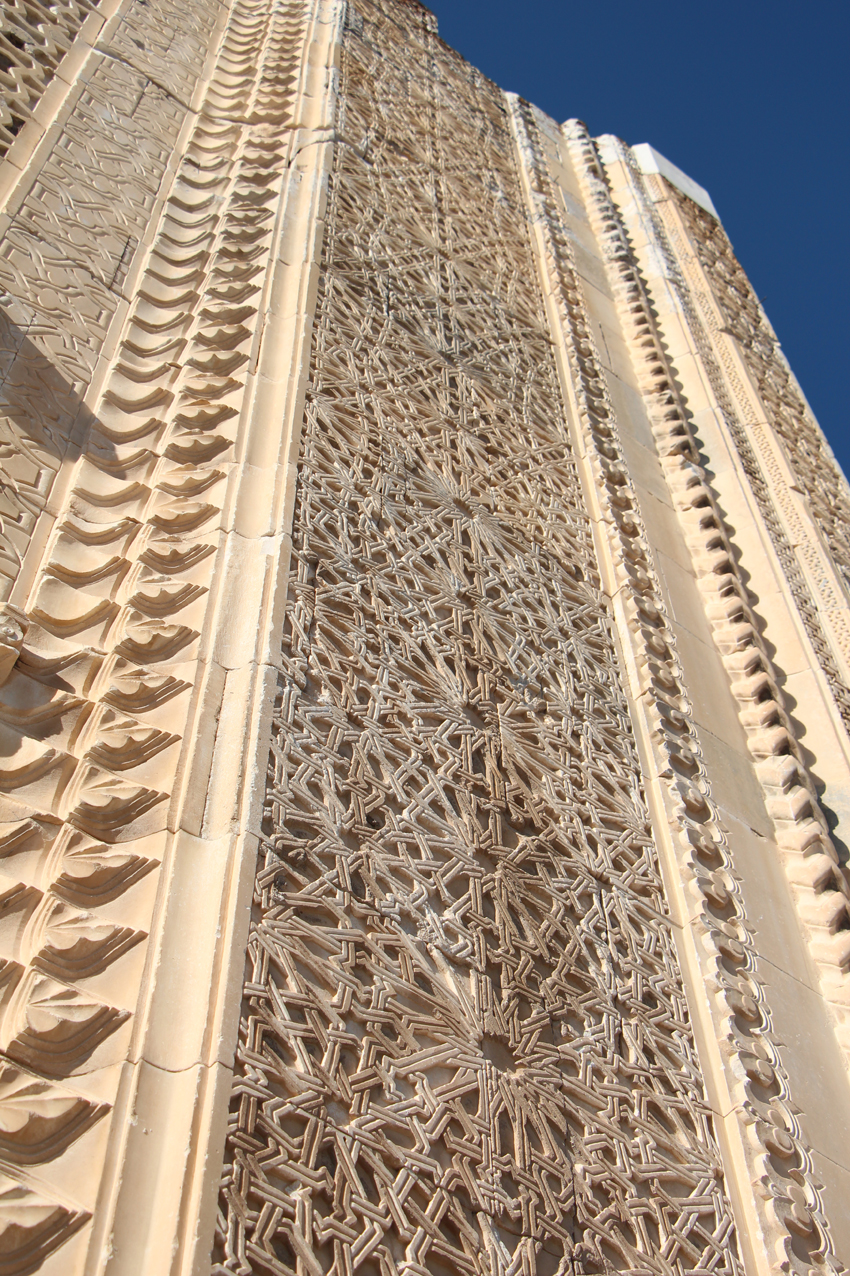
It hasn't changed much since those 13th-century travellers slept in the dark rooms and cooked their meals under the arches on the veranda, and the carved stone still decorates the front walls around the heavy "portal" door that was only opened during daylight hours.
The complex had closed rooms as well as open-air spaces,
with the undercover spots used during winter and the exposed areas favoured
when the warmer weather arrived, and watchtowers on each corner presented guards with
a “monumental view” across the plains.
A mosque was also put in the middle of the centre courtyard
with enclosures dedicated to cooking, eating, sleeping and bathing set around the
sanctuary.
Wednesday, October 17, 2012
Whirling perfection
IT'S official, I'm perfect.
I had long suspected as much, but it was confirmed today when I visited the Mevlana Museum in the Turkish city of Konya.
There's a sign above the front door explaining "those who enter here incomplete will come out perfect" and after walking through the grand Ottoman doors, and exiting the historic building some time later, I felt elevated to a new level of perfection.
A fellow called Rumi - or Mevlana to his mates - was one of the 13th century's most respected philosophers and when he died in the 1200s his ancestors developed the technique of falling into a trance and spinning for hours to pay their respect.
There were hundreds of Whirling Dervishes lodges around Turkey in the decades after Rumi's death, with the order considered to be just another religious sect, but all were abolished by Ataturk when he reorganised Turkish society in the early days of independence.
The Konya lodge survived and was reestablished in 1957, because it was "a cultural association intended to preserve a historic tradition", and while tourists are treated to Whirling Dervish displays in different parts of the country they can visit the Mevlana Museum to see where it all began and gaze across rows of graves that sit below the buildings lofty domes.
The old mosque is topped by a turquoise tower that's considered to be one of the most distinctive sites in Turkey, and I spoke to a museum guide who told me that when the ornate crown was put in place the tiles were a dark blue but had faded to the softer shade over the centuries.
- posted from my iPad
Location:Koza Sk,Kaş,Turkey
Subscribe to:
Posts (Atom)