Wednesday, December 21, 2011

Pleasantest sensations


FREYA Stark, the British explorer who was one of the first women to do this travel-writing thing, once said ``to awaken quite alone in a strange town is one of the pleasantest sensations in the world’’.

There’s a good chance Ms Stark was in some exotic Middle Eastern location when she made the now-famous statement – she wrote more than 20 books between the 1930s and 1980s, most which focused on her travels in Arabia, Iran and Afghanistan – but it’s a quote that comes back to me regularly when I’m travelling solo.

These words popped into my head again this morning when I woke up in my hotel room in Geneva, and it occurred to me that I had no appointments to keep during the day so could follow my nose around a city that I had never seen before.

So, after getting ready for the day, I left my hotel and walked along the edge of Lake Geneva before crossing the Pont du Mont Blanc and venturing into the city’s elegant Old Town.

This part of town, the congested neighbourhood that once sat inside the wall that protected the medieval settlement from invaders keen to secure a way across the Rhone River, is now a maze of streets that grew to accommodate those who sought refuge from the Reformation in Geneva.

And, as I walked along footpaths lined with buildings that went back a few decades or a few centuries, I couldn’t help but agree with Ms Stark, to awaken alone in a strange town is one of the pleasantest sensations in the world.

Tuesday, December 20, 2011

Geneva's Escalade


GOOD luck, rather than good management, has put me in Geneva on the weekend of the Swiss city’s biggest celebration.

The Escalade is three days of non-stop festivities that commemorate and celebrate the night in 1602 when the residents of the Geneva’s walled city repelled an attack by the Duke of Savoy.

The Duke wanted to take the settlement, as it was the only safe place to cross the Rhone River at the time, and once he was inside he intended to "wipe out the heresy he found within before making Geneva the capital of his territories on the other side of the mountains".

"Shortly after midnight, the well-equipped Savoyard army of over two thousand men took up positions in Plainpalais,’’ the event’s brochure explained.

"A large group of soldiers split from the main body and made their way to the foot of the city walls where they proceeded to set up their ladders and then scale the defences without giving themselves away.

"As the whole of Geneva slept the invasion began, but the operation was suddenly interrupted when a patrol leaving its position at the Poste de la Monnaie came across the attackers (and) in the ensuring skirmish a sentry fired his arquebus at the invaders and the alarm was sounded.

"Bells rang out, first from the cathedral tower and then from all the churches of the city – the inhabitants were woken from their sleep and rushed to take up arms, and soon the entire population of Geneva had entered the fray.

"As the cannons roared the Savoyard army was driven back and forced to flee, and in the morning the Genevans, who lost 18 of their fellow citizens, gathered in the churches to give thanks to God for having saved them from such grave danger."


The Escalade happens across a weekend in the middle of December when the network of streets that once sat inside the wall play host to markets, parades and walking tours with cannons fired to recreate the battle and locals dressed in the costumes of the day.

"The occasion is marked by three days of events, during which the (residents) recreate life at it was at the end of the 17th century in the Old Town and cathedral area," the brochure notes.

"The celebrations are brought to a close on Sunday evening, with a historical procession that paints a vivid picture of the people of Geneva at the time of the Escalade."

I arrived in Geneva late this afternoon, and wandered into the Old Town just as the people who were going to take part in the procession were gathering and starting to make their way to the starting point in the Parc du Bastions.

As I explored, passing stalls set up outside shops to selling hot soup and other warm treats, the drum and fife bands that would march later in the evening were warming up by marching through the streets and pausing to play for the gathering crowds.

In the narrow lanes, with medieval terrace houses sitting just a few metres apart across the antique cobbles, the pulse-like beat of the drum and high whistle of a chorus of fifes echoed through the neighbourhood.


The parade started not long after the sun set on Geneva, with a team of teenagers holding burning torches to light the route, and more than 800 people all dressed in period costume weaved through the city passing those locations that were so important during that night in 1602 when the people fought off an army.


Sunday, December 18, 2011

A table with a view

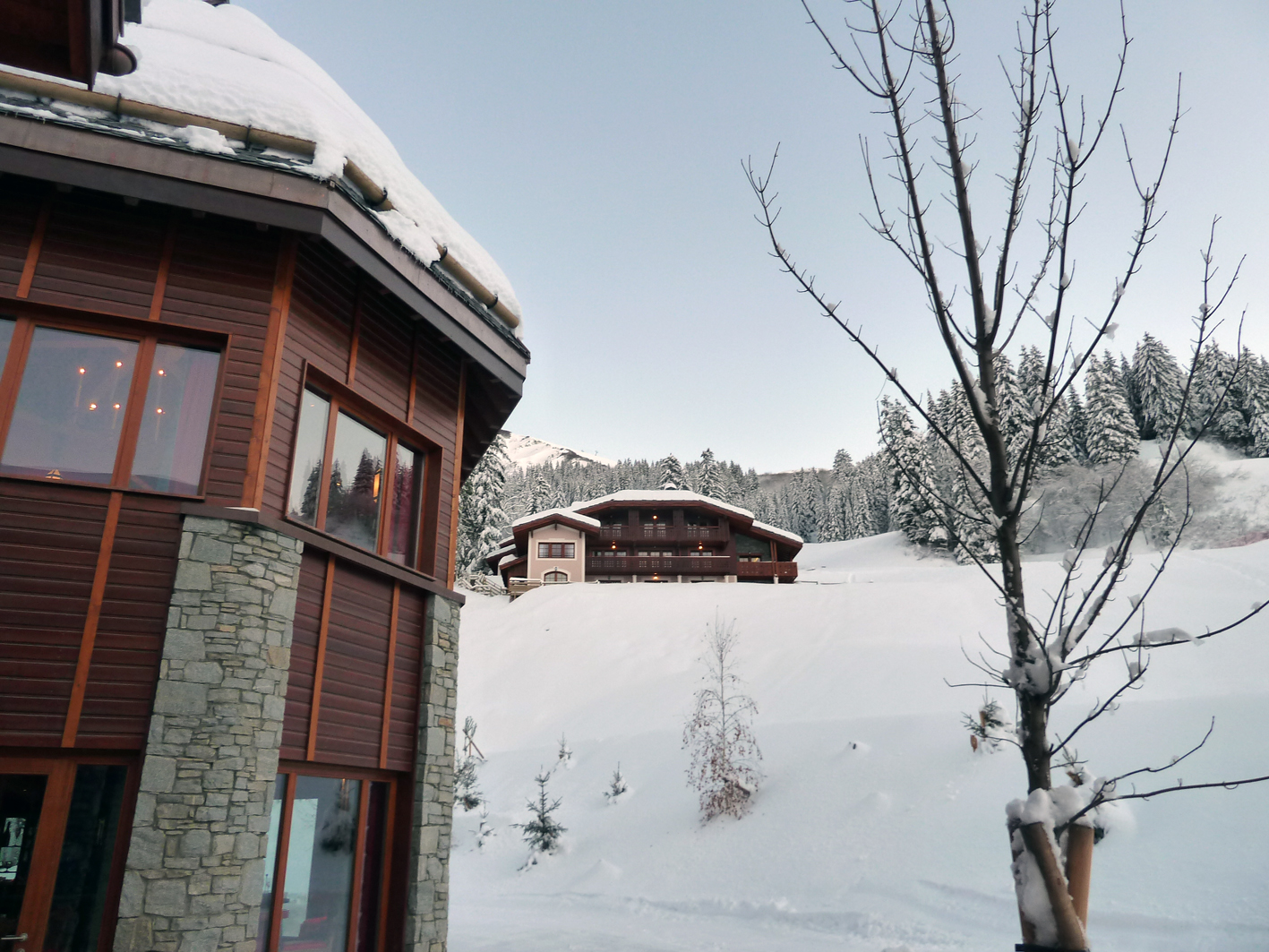
THIS is the table I occupied at breakfast this morning.

I took a magazine to read while I enjoyed my bacon and eggs, but I didn't even get to the first page as the view was far more interesting than anything inside my glossy travel publication.

The sun doesn't rise here until a little after 8am, with the soft pink of the dawn hanging in the sky for another hour or so, and this morning the pastel shade was still hovering near the horizon as I ate.

Food is a highlight of a Club Med stay, with an extensive buffet served three times a day, and it isn't hard to spend a couple of hours lingering over a meal and talking to the staff who came from all over the world to work at the new holiday resort.

There are four dining rooms at Club Med Valmorel, one decorated in honour of each season, and this room is an ode to summer.

And I can only imagine what the view must be like in the warm months when the alpine pastures are covered in a carpet of wildflowers.

Saturday, December 10, 2011

Mmmm, macarons


I JUST had my first real French macaron, and it was delightful.

The outside was defiantly hard and broke with a firm crackle, the interior was a deep shade of rose and enticingly gooey, there was a light gel in the middle that exploded in my mouth with a burst of pink, and the flavor was beautifully sweet and tasted just like the colour.

Before today I didn't understand what all the fuss was about, but now I get it.

Now that I've had a real French macaron I will never again be able to eat the imitations they make at home, just like Italy spoiled me for pizza.

And, just to settle any arguments, I asked the French chef how to pronounce the name of the sweet treet and he said it was as mac-a-ron not a mac-a-roon.

- Posted from my iPad

Friday, December 9, 2011

Another first

ANOTHER first for me today.

A few months ago I was the first passenger to sit in the fifth row of the brand new Qantas 737-800 called Tamworth, and now I'm the first guest to occupy room 3030 at the brand new Club Med resort in the French Alps.

I'm the very first person to sleep in the bed, watch the television, sit on the balcony to enjoy the view along the valley to the jagged peaks in the distance, soak in the bath, and hang my clothes in the wardrobe.


Club Med Valmorel sits at the top of a winding Tour de France-style road, an hour south of Albertville which hosted the Winter Olympics in 1992, in the heart of the Savoie region of the French Alps.

The sprawling complex, which can accommodate 1000 guests in 446 four-trident rooms and five-trident suites, took 18 months to build and cost a whopping $113 million which is an achievement when you consider how the GFC has restricted credit for property development.

When it comes to winter sports the location couldn't be better, with Club Med Valmorel part of the Valle de la Tarentaise with famous alpine stations like Couchevel, Meribel, Col de la Madeleine and Val d'Isere just some of the neighbors.


Hudry Laurent, technical director at the Club Med Valmorel ski school, says the resort is in the heart of the alpine region that's accommodates around 60 per cent of the skiing that happens in the French Alps.

"Valmorel is one of the youngest ski areas in France, it was only established 36 years ago, and it's in the Vallee de la Tarentaise which is home to famous resorts like Three Valleys and Val d'Isere,'' Mr Laurent explains.

''Our guests can use all the runs at Valmorel as well as the neighbouring resort at St Francoise Longchamp, which is just over the mountain and accessible by gondolas and chairlifts from here, and the Col de la Madeleine is an hour away.

"Valmorel is in a circle (of peaks), so when the snow is coming the clouds stay in this area longer, we get more snow than some of the other areas nearby and that is a peculiarity of Valmorel.

"Three days ago it was completely green here, because France just had the warmest autumn for a century, but it started snowing earlier this week and we had 70cm in just two days so we are ready to open the mountain when we open Club Med Valmorel."


Club Med is describing the new retreat at Valmorel as its ''flagship upscale ski resort'' and explaining its unique in the company's stable of European properties because it has a collection of kid's clubs that cater to all ages from babies to teenagers and features four and five-trident rooms under one roof.

It was designed and built using the stone and wood that is preferred in this ''valley of the mountain people'', and with the internal spaces decorated in warm tones it is a cosy space to be when it turns white and cold outside.


If you would like to see more photos of Club Med Valmorel check out my Picasa gallery...https://picasaweb.google.com/116491940236006958570/ClubMedValmorel

- Posted from my iPad

Thursday, December 8, 2011

So close, but yet...

I WAS 12km from Venice today.

It was 12km straight up, so there was no chance I could pop in for a limonata at one of the cafes in St Mark's Square, with my Etihad flight from Abu Dhabi to Geneva passing right over the top of the enchanting Italian city.

I was flying to Geneva to visit the newest Club Med resort, which is in the French Alps, and I flew into the Swiss city because it's the closest airport to this new international ski destination which is just south of Albertville in the Savoie region of France.

The flight was delightful - it always is in long-haul business class - and I didn't see much of the view during the seven-hour flight from the UAE because I was stretched out in my oh-so-indulgent flat bed snoozing.

But when I did slide the window shade up the plane was over Croatia and I had a beautiful view of the Adriatic coast, with the islands stretching out before me on a carpet of silver laid by the midday sun.


The plane then flew over Venice, across northern Italy passing over Lake Garda and beside Milano, and then we descended into the cloud that was hovering above the Alps.


My next view of the ground came when we dropped below the dense soup of snow clouds to land at Geneva, and we flew over Lac Leman - that's Lake Leman for those of you not getting into the French language thing - which drifts away from the Swiss city like a plume of smoke rising from a bushfire.

Well, that's at least how it looks on my map of the Alps.

- Posted from my iPad

Friday, December 2, 2011

Trip #15

My Singapore adventure is now done, and here are the stats...

Flights – Two in six days
Kilometres flown –  12,512km...Melbourne to Singapore return
Total Kilometres flown in 2011 – 181,650km
Hotels – Shangri-La's Rasa Sentosa Resort, Shangri-La Singapore
Total number of hotels in 2011 –46
New stamps in my passport – Two, you have to love the folks at Singapore immigration for still stamping the passport
New countries – None, still on 49


Thursday, December 1, 2011

Sacred Singapore


I TURNED my back on the bright lights of the big city today and headed to a quiet spot on Singapore’s northern edge to remember an important episode in Australian history.

With a car and a driver at my disposal for a few hours I decided it was a good time to visit the Kranji War Cemetery, the place where so many of the Australians who died defending Singapore during the horrific days of World War Two were buried.

Kranji is 22km from central Singapore, on a slope overlooking the Straits of Johore, and on the edge of the patch of territory the Australian military was told to defend as the Japanese made their way south along the Malaysian peninsula in 1942.


In the years before the Second World War the Kranji area was home to a military camp and, when the Japanese invaded neighbouring Malaya, it became an ammunition dump as Allied forces and the British command made plans to defend the tiny island.

On February 8, 1942, the Japanese crossed the Straits and landed at the mouth of the Kranji River, which is a stone’s throw from where the graves now dot the grassy slope.

"On the evening of 9 February, (the Japanese forces) launched an attack between the river and the causeway,’’ the Commonwealth War Graves Commission website explains.

"During the next few days fierce fighting ensued, in many cases hand to hand, until their greatly superior numbers and air strength necessitated a withdrawal.

"After the fall of the island, the Japanese established a prisoner of war camp at Kranji and eventually a hospital was organised nearby at Woodlands.

"After the reoccupation of Singapore, the small cemetery started by the prisoners at Kranji was developed into a permanent war cemetery by the Army Graves Service when it became evident that a larger cemetery at Changi could not remain undisturbed.

"In 1946, the graves were moved from Changi to Kranji, as were those from the Buona Vista prisoner of war camp.

"Many other graves from all parts of the island were transferred to Kranji together with all Second World War graves from Saigon Military Cemetery in French Indo-China (now Vietnam), another site where permanent maintenance could not be assured.

"There are now 4,461 Commonwealth casualties of the Second World War buried or commemorated at Kranji War Cemetery, and more than 850 of the burials are unidentified."

The Chinese Memorial in Plot 44 marks a collective grave for 69 Chinese servicemen – all members of the Commonwealth forces, who were killed by the Japanese during the occupation in February 1942 – and the Singapore Memorial bears the names of more than 24,000 casualties with no known grave.

The Singapore Cremation Memorial, which stands immediately behind the Singapore Memorial, commemorates almost 800 casualties, mostly of the Indian forces, whose remains were cremated in accordance with their religious beliefs.

"The Singapore Civil Hospital Grave Memorial stands at the eastern end of the Singapore Memorial," the website says.


"During the last hours of the Battle of Singapore wounded civilians and servicemen taken prisoner by the Japanese were brought to the hospital in their hundreds (and) the number of fatalities was such that burial in the normal manner was impossible.

"Before the war an emergency water tank had been dug in the grounds of the hospital and this was used as a grave for more than 400 civilians and Commonwealth servicemen.

"After the war, it was decided that as individual identification of the dead would be impossible, the grave should be left undisturbed.

"The grave was suitably enclosed, consecrated by the Bishop of Singapore, and a cross in memory of all of those buried there was erected over it by the military authorities."

Today Kranji is a peaceful place, one of the few spots on this busy island that’s not washed with traffic noise, and on this oppressively hot day the only sounds I could hear as I walked the rows of white stones was a sprinkler shooting water across the lawns and the hypnotic buzz of insects.

While there are Australian soldiers, sailors and airmen buried right around the complex the first four rows are completely occupied with stones marked by the rising sun, and I wandered reading the names, ages and hometowns of these fine men that perished so far from home.

All the Australian graves look the same – the rising sun, the soldier’s name, unit, age, and the date he died – but some families asked that an additional sentence be carved into the stone just above the place it sits in the earth.


Some of these messages note that a soldier will be missed by a mother, wife or sister, some simply remember his parents name and his home town, with others featuring some religious quote or a rousing patriotic comment.

But there was with a message that made me stop and think.

It was the grave of Private R Lindwall, he was serving with the 2/30 Infantry Battalion and he died on March 31, 1945, when he was 32 years old.

Someone at home, when they were told that their relative had a stone in Kranji War Cemetery, asked that the words "his duty remembered by those in Australia" be carved into the smooth piece of white rock.

Back in the 1940s or 1950s, when the words were carved, I suspect that was only a wish, but because Australia has embraced the men and women who joined our army, navy and air force during times of international crisis this is exactly what’s happening now.

So, next Anzac Day, when you watch the sun come up, think of Private Lindwall and remember a man who died a long way from home in a place he probably thought was hotter than hell.